Sourcing accurate historical data on eyewear evolution is frustratingly difficult for B2B buyers and enthusiasts alike. Relying on myths about who invented sun glasses can lead to misunderstandings about material origins and manufacturing heritage, costing you credibility in the market. This comprehensive timeline analyzes the engineering and design milestones that created the modern eyewear industry. Backed by decades of manufacturing expertise, we clarify the technical lineage of your favorite frames.
1. Who Invented Sun Glasses Using Ivory in the Arctic?
No single individual can claim the title of who invented sun glasses, as their creation spans centuries of innovation, starting with survivalist engineering. The earliest known form of glare protection wasn’t made of glass at all, but of organic materials like walrus ivory, crafted by the Inuit people to survive blinding snow reflection. If you are looking for modern custom sunglasses that prioritize durability, understanding these early mechanical solutions provides fascinating context for today’s impact-resistant designs.

Inuit Innovation vs. Modern Engineering
Here’s the deal: the prehistoric Inuit “snow goggles” were a masterpiece of physics rather than optics. By carving narrow horizontal slits into curved pieces of bone or antler, they mechanically limited the amount of light entering the eye. This prevented snow blindness without the need for tinted lenses, a concept that predates modern manufacturing by thousands of years.
Physics of the Slit Design
You might be wondering: how did they see without lenses? The slit acted similarly to a pinhole camera, increasing depth of field while blocking indirect scattered light.
- Reduced ultraviolet exposure by limiting the aperture.
- Prevented freezing of the eye surface in sub-zero winds.
- Relied on opaque materials rather than transparency.
Key Takeaway
While the Inuit did not use glass, they engineered the first functional solution for solar glare.
| Feature | Inuit Goggles | Modern Sunglasses | |
|---|---|---|---|
| Material | Walrus Ivory/Bone | Acetate/Metal | |
| Glare Control | Physical Slits | Tinted Lenses | |
| UV Protection | Partial (Mechanical) | 100% UV400 |
The mechanical limitation of light remains a valid principle in safety eyewear design today.
2. Did Chinese Judges Know Who Invented Sun Glasses?
While the Arctic tribes focused on survival, 12th-century Chinese elites used smoky quartz lenses, though not strictly for the reasons we ask who invented sun glasses today. These early “glasses” were flat panes of smoky quartz used by judges in courtrooms to conceal their facial expressions during interrogations. This historical nuance highlights that the concept of “darkened eyewear” often had social or psychological functions long before it became a tool for UV protection or eyeglasses for vision correction.
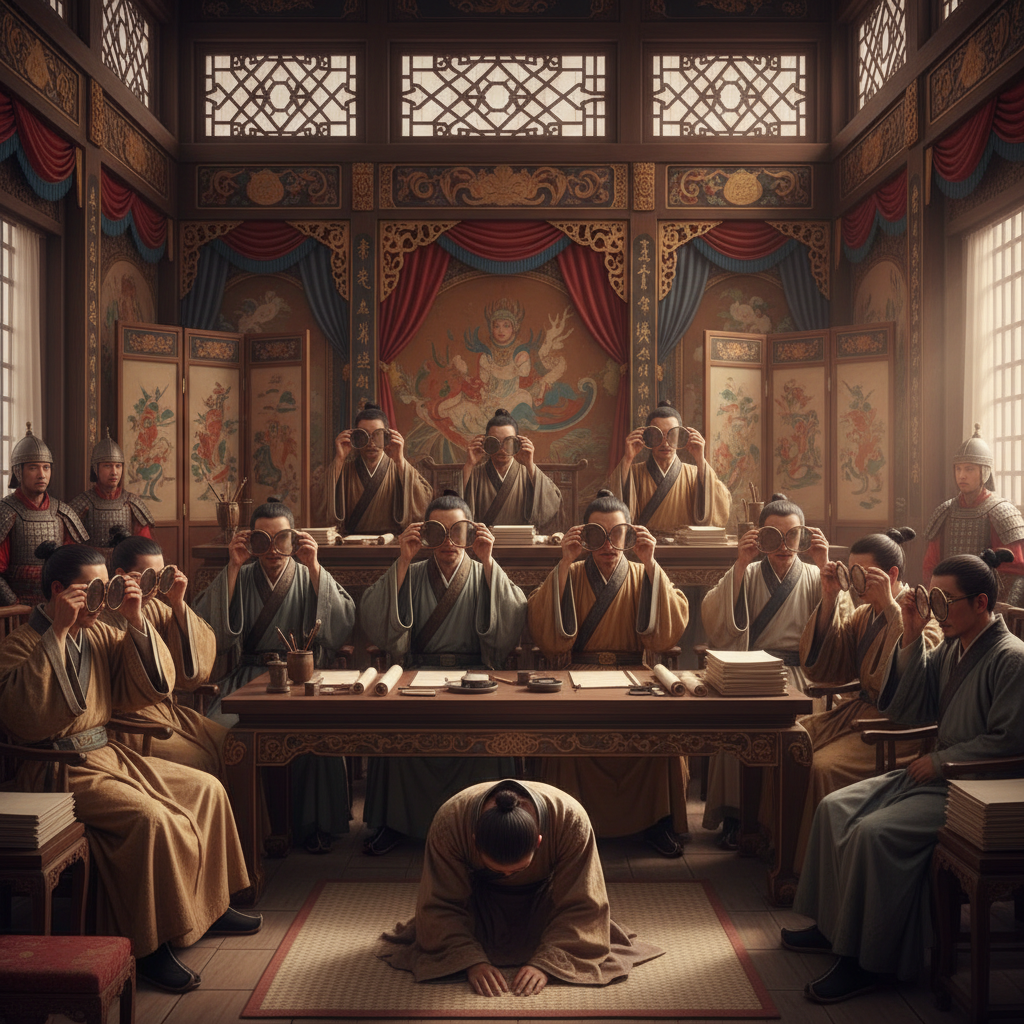
Smoky Quartz of the Song Dynasty
But here’s the kicker: the lenses offered no optical correction. They were roughly cut from natural quartz crystals, meaning they often distorted vision rather than improving it. The primary goal was anonymity and authority, allowing judges to observe witnesses without revealing their own reactions.
Concealing Facial Expressions
Think about it: in a high-stakes legal environment, a judge’s neutrality is paramount.
- Smoke-colored quartz provided a dark barrier.
- Frames were often heavy and held by hand or weighted ribbons.
- The psychological impact on the accused was significant.
Key Takeaway
The Chinese contribution was the introduction of a transparent yet darkened medium for the eyes.
| Attribute | Chinese Quartz | Modern Lenses | |
|---|---|---|---|
| Primary Use | Concealment | Vision/Protection | |
| Material | Natural Quartz | Polycarbonate/Glass | |
| Optical Quality | Poor/Distorted | Precision Ground |
This application established the social power of wearing dark glasses, a trait that persists in fashion today.
3. Who Invented Sun Glasses with Venetian Glass Lenses?
By the 18th century, the query of who invented sun glasses shifts to Venice, Italy, where glassblowing technology enabled new optical experiments. Venetian glassmakers, famous for their mirrors and chandeliers, began producing “Goldoni glasses” for gondoliers who spent their days fighting the harsh glare of the sun reflecting off the canals. These green-tinted lenses were among the first true attempts to use colored glass specifically for visual comfort, a precursor to the specialized tints we use in blue light glasses today.

The Goldoni Glasses Legacy
What’s the real story? Carlo Goldoni, a famous playwright, popularized these glasses, but the gondoliers were the practical users. The constant exposure to shimmering water required a solution that didn’t block vision entirely like the Inuit slits. Green glass was found to be particularly soothing and effective at cutting through the specific spectrum of glare found on the water.
Why Green Tint Mattered
Ready for the good part? Green lenses offered high contrast.
- Filtered out specific wavelengths of light.
- Reduced eye strain during long shifts on the canals.
- Showcased Venice’s superior glass manufacturing capabilities.
Key Takeaway
Venice bridged the gap between crude quartz and manufactured optical glass.
| Innovation | Venetian Era | Previous Eras | |
|---|---|---|---|
| Lens Medium | Manufactured Glass | Natural Crystal/Bone | |
| Tint Color | Green (Specific) | Smoky/Opaque | |
| User Base | Workers (Gondoliers) | Elites/Judges |
The specific choice of green tint demonstrated an early understanding of light filtration.
4. Who Invented Sun Glasses Designs for Vision in 1752?
James Ayscough constitutes a major turning point in the timeline of who invented sun glasses, as he was the first to scientifically propose tinted lenses for therapeutic purposes. In 1752, this English optician experimented with blue and green tints, believing they could correct specific vision impairments. Although he wasn’t marketing them as “sun glasses” for the beach, his work laid the technical foundation for medical-grade tinted eyewear, similar to how we engineer reading glasses for clarity today.
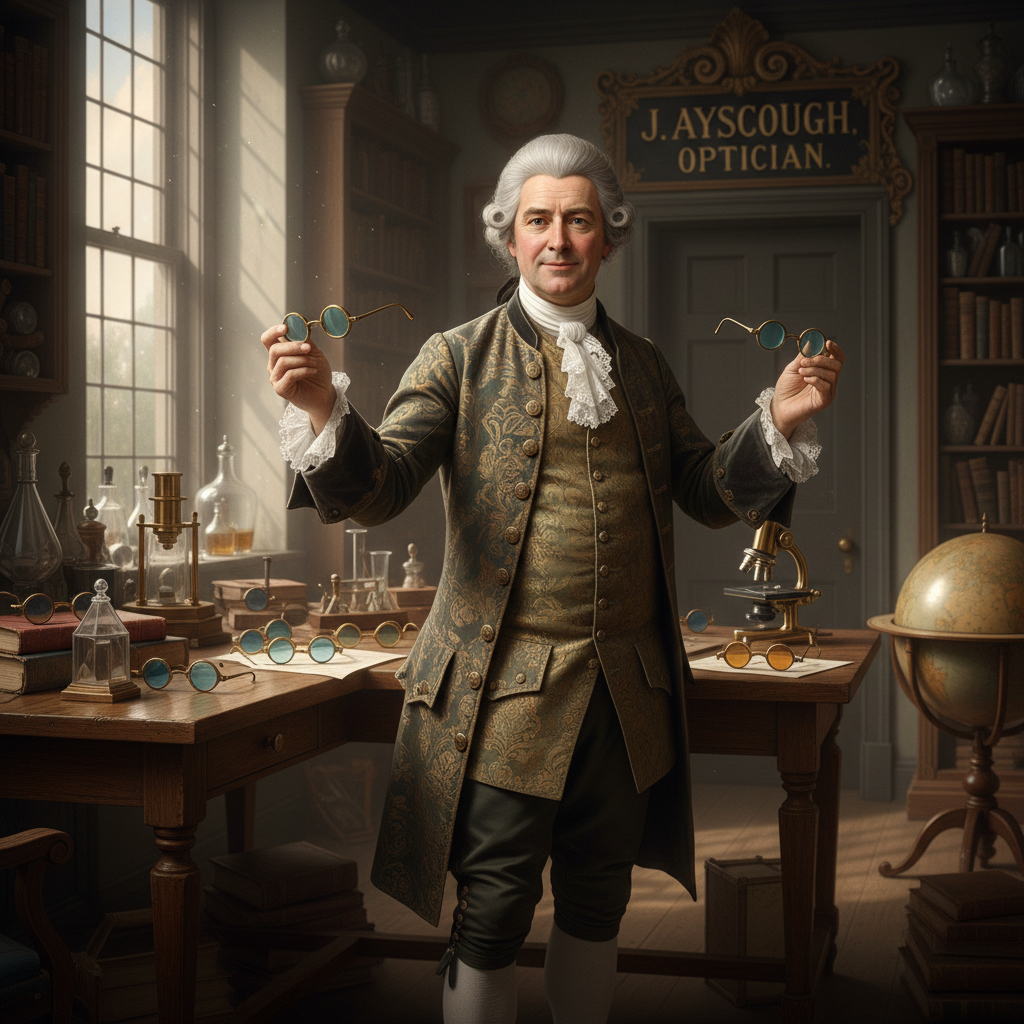
Ayscough’s Optical Experiments
This is where it gets interesting: Ayscough believed that clear glass was actually detrimental to “weak” eyes. He argued that the harsh white light exacerbated vision problems and that tinted glass was a medical necessity. This moved the conversation from “hiding eyes” to “treating eyes.”
Blue vs. Green for Correction
You might be wondering: why these specific colors?
- Blue tints were thought to cool the light entering the eye.
- Green tints were used to soften the glare of writing paper.
- The focus was on long-term eye health rather than momentary protection.
Key Takeaway
Ayscough is the grandfather of the therapeutic lens market.
| Inventor | Primary Goal | Lens Type | |
|---|---|---|---|
| Ayscough | Medical Correction | Tinted Glass | |
| Predecessors | Glare/Disguise | Opaque/Quartz | |
| Modern | UV Protection | Polarized/Coated |
His scientific approach validated the manufacturing of colored lenses on a larger scale.
5. Did Silent Film Stars Define Who Invented Sun Glasses?
Before the mass market exploded, silent film stars in the early 20th century inadvertently redefined who invented sun glasses as a cultural phenomenon. Actors and actresses began wearing dark glasses not just to hide from fans, but to shield their eyes from the incredibly bright arc lights used on movie sets. This practical need for occupational safety quickly morphed into a symbol of glamour, influencing the aesthetic designs we see in high-fashion eyewear today.
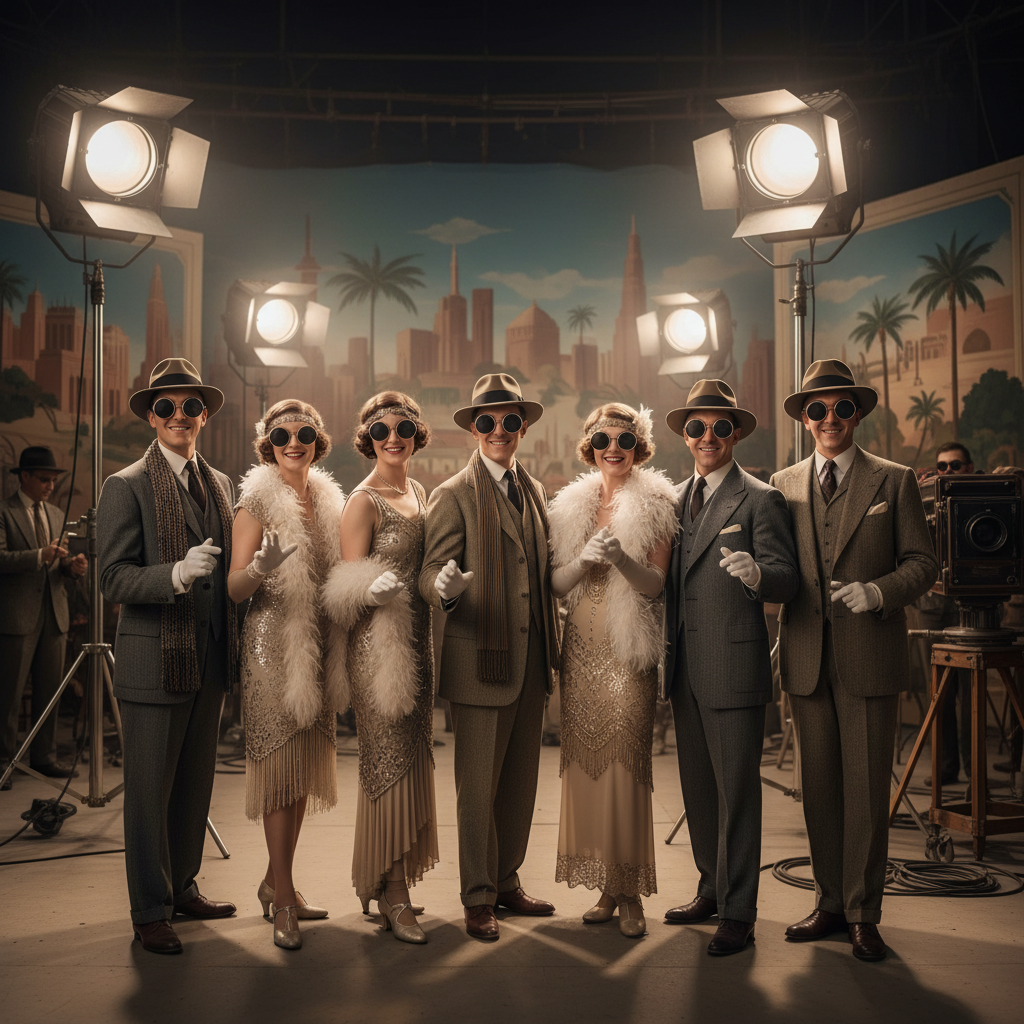
Shielding Eyes from Arc Lights
What’s the catch? The studio lights of the 1910s and 20s were rich in UV radiation and blindingly bright. “Klieg eyes,” a painful condition similar to welder’s burn, was a common occupational hazard. Dark glasses were personal protective equipment (PPE) for the Hollywood elite.
The Rise of Celebrity Mystique
Think about it: seeing a star in glasses signaled their status.
- Created a barrier between the celebrity and the public.
- Hid red, tired eyes caused by long shooting schedules.
- Established the “oversized” frame trend to cover more of the face.
Key Takeaway
Hollywood turned a medical necessity into a desirable fashion statement.
| Driver | Silent Film Era | Modern Era | |
|---|---|---|---|
| Origin | Studio Lighting Safety | Style/UV Safety | |
| User | Movie Stars | General Public | |
| Perception | Mysterious/Elite | Cool/Functional |
The association between fame and dark glasses was permanently cemented during this era.
6. Who Invented Sun Glasses for the Mass Market?
Sam Foster is the definitive answer to who invented sun glasses for the general American public. In 1929, he founded the Foster Grant company and sold the first pair of mass-produced sunglasses on the Atlantic City Boardwalk. By utilizing injection molding technology and affordable celluloid plastics, he transformed sunglasses from a medical device into an accessible accessory for beachgoers, paving the way for the volume production techniques used by manufacturing partners today.
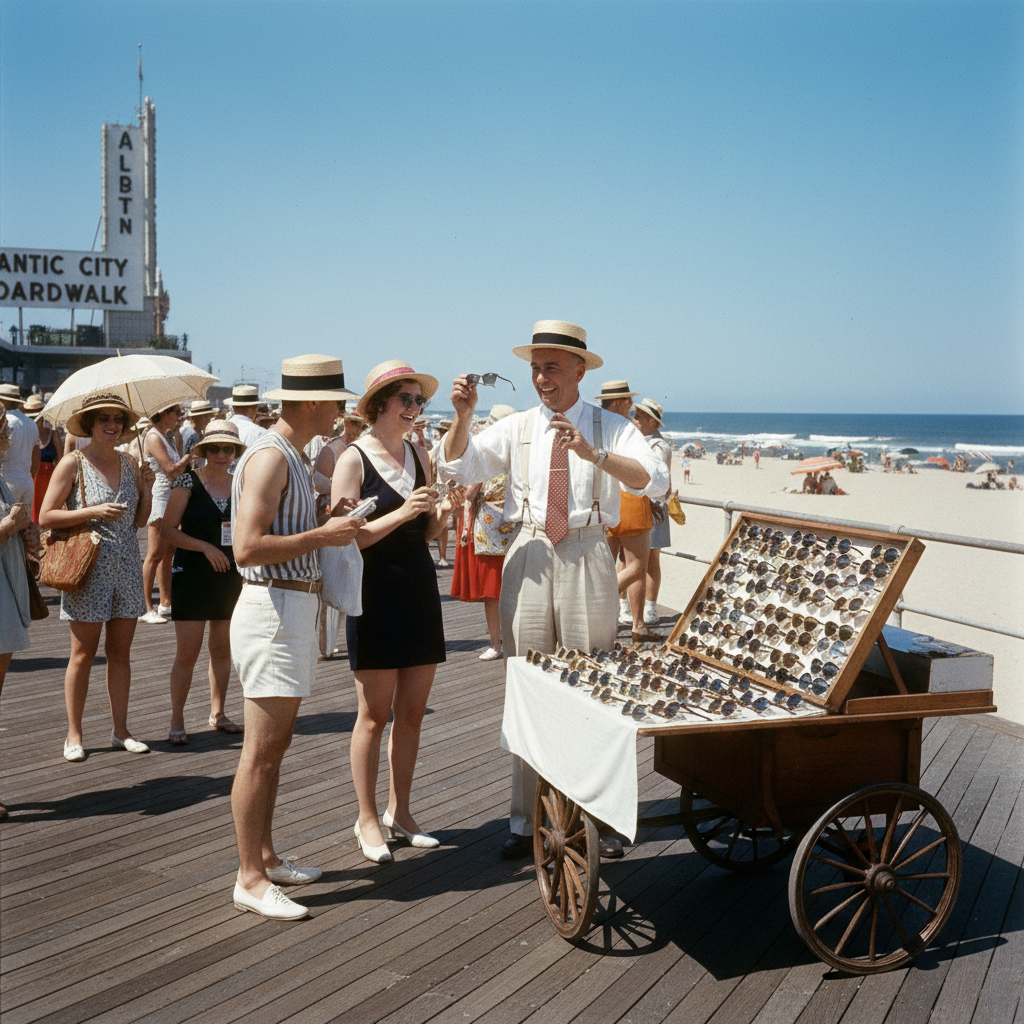
The Foster Grant Empire
Here is the bottom line: Foster recognized a specific use case—beach glare—and a specific market—vacationers. He didn’t just sell glasses; he sold the experience of comfortable leisure. This commercial insight launched the eyewear industry as we know it.
Injection Molding Revolution
So, what does this mean for you? It meant consistency and lower costs.
- Replaced hand-cut lenses with mass-produced plastic.
- Allowed for trendy, colorful frame designs.
- Made eyewear disposable and seasonal.
Key Takeaway
Sam Foster democratized eye protection through industrial manufacturing.
| Aspect | Pre-1929 | Post-1929 | |
|---|---|---|---|
| Availability | Opticians/Custom | Boardwalks/Drugstores | |
| Cost | Expensive | Affordable | |
| Material | Glass/Metal | Plastic/Celluloid |
This shift enabled sunglasses to become a staple of American culture.
7. Who Invented Sun Glasses for Military Pilots?
While Foster captured the beach, the US Army Air Corps drove the innovation behind who invented sun glasses for aviation. In the 1930s, Bausch & Lomb was commissioned to create optical glass that could block high-altitude glare that was causing pilots severe headaches and nausea. The result was the iconic “Aviator” style with green G-15 lenses, a design so effective it remains a standard in military and civilian utility wear.

General MacArthur and the Icon
But wait, there’s more: The image of General Douglas MacArthur landing in the Philippines wearing his aviators turned a piece of military kit into a symbol of authority and heroism. The teardrop shape was functional, designed to cover the entire field of vision as pilots looked down at their instruments.
Anti-Glare for High Altitudes
You need to know this: The physics at 20,000 feet are different.
- UV radiation increases with altitude.
- Cloud glare is more intense than ground reflection.
- The G-15 lens blocked glare without obscuring instrument readings.
Key Takeaway
Military requirements pushed optical quality to new heights of precision.
| Spec | Aviator Goggles | Previous Tints | |
|---|---|---|---|
| Shape | Teardrop (Full Cover) | Round/Small | |
| Lens | G-15 Optical Glass | Celluloid/Quartz | |
| Function | High Altitude Clarity | Surface Glare |
The Aviator proved that function creates the most enduring forms.
8. Who Invented Sun Glasses with Polarized Technology?
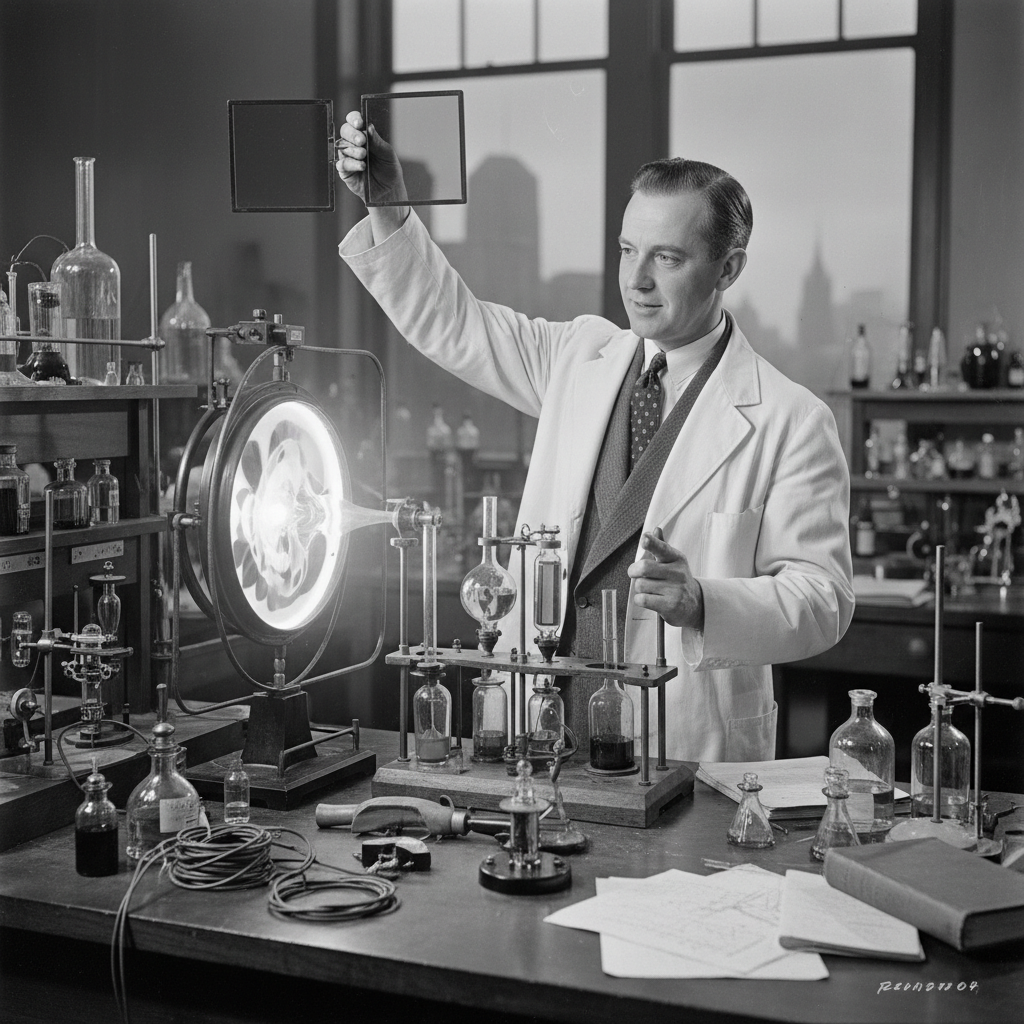
Edwin Land, the genius behind the Polaroid camera, is the scientist who invented sun glasses with polarized filters in 1936. His invention did not just darken the view; it physically blocked horizontal light waves, which are responsible for the blinding glare off roads, water, and snow. This technological leap is the backbone of modern safety eyewear and is crucial for anyone sourcing performance custom eyewear .
Eliminating Horizontal Glare
What’s the catch? Standard tinted lenses just dim the world. Polarized lenses act like a chemical venetian blind. They only allow vertical light to pass through, effectively killing the glare that bounces off flat surfaces.
The Safety Revolution
Think about it: for driving or fishing, this was magic.
- Drastically improved visual acuity.
- Reduced reaction times for drivers.
- Allowed fishermen to see beneath the water’s surface.
Key Takeaway
Land’s invention changed sunglasses from light dimmers to light filters.
| Type | Standard Tint | Polarized | |
|---|---|---|---|
| Physics | Absorbs Light | Blocks Horizontal Waves | |
| Clarity | Reduced Brightness | High Contrast | |
| Use Case | General Fashion | Driving/Water Sports |
Polarization remains the gold standard for functional sun protection.
9. Did Post-War Fashion Change Who Invented Sun Glasses?
After World War II, the question of who invented sun glasses became less about engineering and more about branding and rebellion. The 1950s and 60s saw a boom in plastic technology and design experimentation, led by cultural icons like James Dean, Marilyn Monroe, and Audrey Hepburn. This era solidified sunglasses as a “cool” accessory, driving manufacturers to innovate with shapes like the Cat-Eye and the Wayfarer that had no precedent in utility.

The Rise of the Wayfarer
Here’s the deal: The Wayfarer marked the transition from metal frames to plastic molding as a premium aesthetic. It was a completely new design language that didn’t rely on the “wire rim” look of the past centuries.
Celebrity Anonymity vs. Display
You might be wondering: why did everyone wear them indoors?
- Signaled membership in the counter-culture.
- Provided a “mask” for the new age of paparazzi.
- Allowed for bold self-expression through frame color.
Key Takeaway
Fashion became the primary driver of sunglass innovation in the post-war era.
| Era | Driver | Dominant Material | |
|---|---|---|---|
| 1930s | Military/Utility | Metal/Glass | |
| 1950s | Fashion/Rebellion | Acetate/Plastic | |
| Modern | Hybrid | Mixed Media |
This era proved that style could sell optical products as effectively as function.
10. Who Invented Sun Glasses Manufacturing Standards Today?
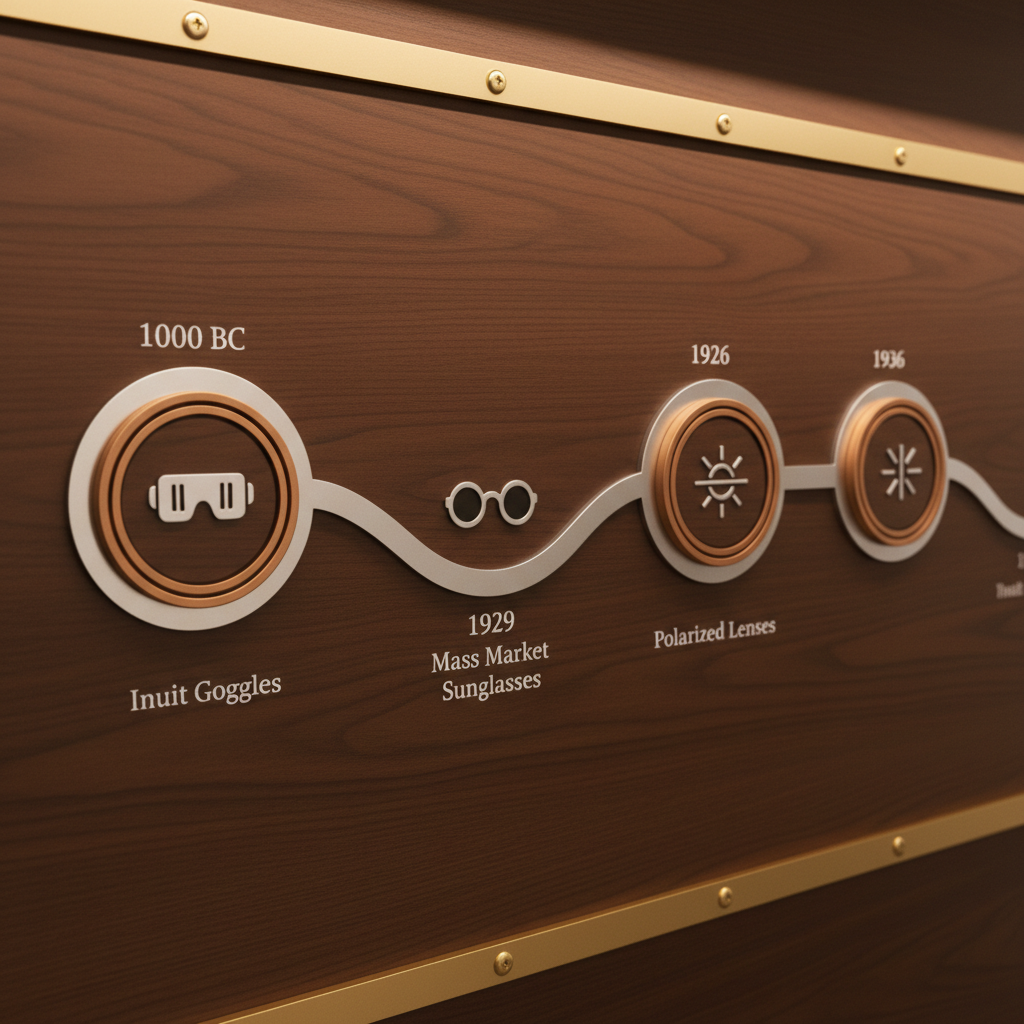
Today, the answer to who invented sun glasses is a collective of global engineering standards and precision manufacturing. Modern production combines the heritage of Venetian glass, the utility of military specs, and the mass-market speed of Sam Foster into a high-tech process. CNC machining, hand-polishing of acetate, and vacuum-coating lenses ensure that current eyeglasses meet safety and optical standards that early inventors could only dream of.
From Celluloid to Acetate and Titanium
Ready for the good part? We no longer use flammable celluloid. Modern cellulose acetate is hypoallergenic, durable, and capable of infinite color depth. Titanium offers strength without weight, a direct descendant of aerospace materials.
The Role of Precision CNC
This is where it gets interesting:
- Computer-aided design (CAD) allows for 0.1mm precision.
- Lenses are now coated with hydrophobic and anti-reflective layers.
- Customization is scalable for B2B brands.
Key Takeaway
Modern manufacturing is the synthesis of 1,000 years of optical history.
| Standard | Historical | Modern | |
|---|---|---|---|
| Precision | Hand Ground | CNC/Digital | |
| Safety | Shatter Prone | Impact Resistant (Polycarb) | |
| Coatings | None | UV400/AR/Scratch |
We stand on the shoulders of giants to produce today’s eyewear.
11. Conclusion
From Inuit survival tools to Venetian glass and Hollywood glamour, the history of who invented sun glasses is a journey of engineering. No single inventor can claim the prize; rather, it was a collective evolution of judges, pilots, scientists, and fashion icons. Understanding this lineage ensures better product development choices today. If you need expert guidance on materials or design, contact our team to start your project. Do not settle for generic history; leverage this knowledge for your next collection.
12. Frequently Asked Questions (FAQ)
Q1: What is the earliest known form of sun protection for eyes?The Inuit created the first known snow goggles using walrus ivory or caribou antler with narrow slits to block glare, dating back thousands of years.
Q2: How does the “Goldoni” glass relate to modern sunglasses?Goldoni glasses were 18th-century Venetian spectacles with green-tinted lenses designed to protect gondoliers’ eyes from the sun’s reflection on canal water.
Q3: Who invented sun glasses for the American mass market?Sam Foster is credited with launching the mass market for sunglasses in 1929 when he began selling Foster Grant eyewear on the Atlantic City Boardwalk.
Q4: Did the Chinese invent sunglasses for sun protection?No, 12th-century Chinese judges used smoky quartz lenses primarily to hide their facial expressions during court proceedings, rather than for UV protection.
Q5: Who invented sun glasses with polarized lenses?Edwin Land, the founder of the Polaroid Corporation, invented the polarized filter in 1936, significantly improving visual clarity and glare reduction.